Mineral Solution
Factors affecting the effect of mineral magnetic separation
If you want to know more information, like quotation, products, solutions, etc., please contact us online.
Magnetic separation is a widely used and effective method for removing iron impurities and magnetic minerals from non-metallic minerals such as quartz, kaolin, bentonite, wollastonite, feldspar, talc, and attapulgite. The effectiveness of magnetic separation directly impacts product quality. Practice has shown that the main factors influencing magnetic separation are:
Mineral magnetic differences
Magnetic separation is based on the magnetic properties of minerals. The greater the magnetic susceptibility (magnetism) of a mineral, the more favorable it is for magnetic separation. Minerals must also exhibit significant magnetic differences; otherwise, magnetic separation and purification will be impossible.
Fineness and particle size composition of the selected minerals
Magnetic separation is primarily suitable for the separation and purification of coarse and medium-sized minerals. As long as the minerals themselves can be separated into individual particles, the particle size should be as coarse as possible, generally larger than 0.074mm, and the particle size should be as uniform as possible. The current lower limit of effective magnetic separation fineness is 0.035mm. Exceeding this fineness can easily cause strong magnetic minerals to be carried away by water, while weakly magnetic minerals are difficult to capture effectively. Using high magnetic field strength and high gradient, the lower limit can reach 10-15μm, but this limits the magnetic separation effect for weakly magnetic minerals.

Mineral Mudification
Some minerals, such as hematite and limonite, are prone to mudification, often forming a sludge cap. This, combined with their inherently weak magnetic properties, significantly affects magnetic separation. Measures such as proper cleaning or grinding fineness control can be taken to address this.

Magnetic Separation Process
Generally, mechanical iron introduced during the crushing process has strong magnetism and should be removed first using weak magnetic separation equipment, followed by strong magnetic separation equipment to remove weakly magnetic impurities. If the content of strongly magnetic materials is high, strong magnetic separation equipment can be used directly to remove iron.

Magnetic Separation Equipment
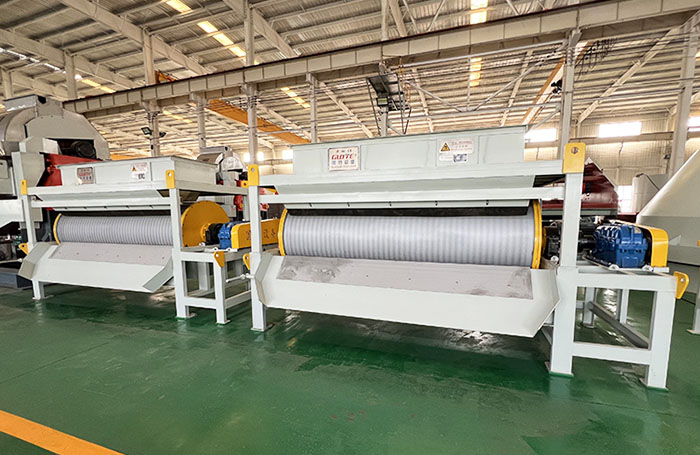
Magnetic separation equipment performance is a key factor influencing magnetic separation effectiveness, primarily including magnetic field strength, magnetic field gradient, and structural characteristics. It should be selected based on the characteristics of the individual minerals.
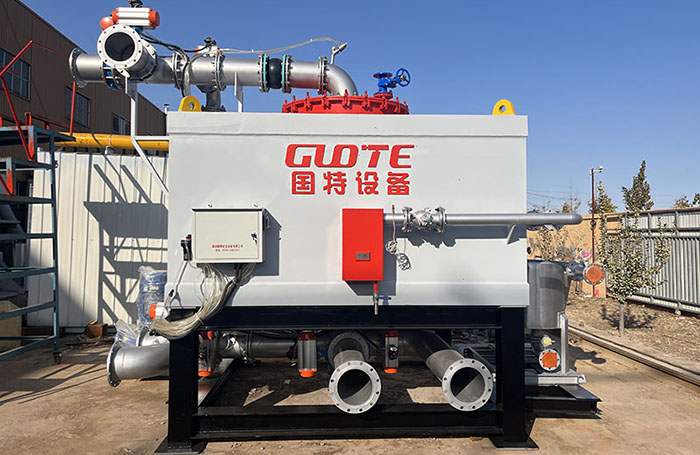
Electromagnetic and permanent magnetic equipment are simple, effective, low-cost, and widely used, but their weak magnetic fields make them less effective for processing weakly magnetic minerals. High-gradient magnetic separators (HDMs) possess a strong magnetic field, capable of separating many iron-containing mineral impurities from slurries. Their applications have expanded beyond conventional magnetic separation and kaolin purification to include environmental protection, biochemistry, and other fields.
Superconducting magnetic separators use superconducting magnets to separate minerals. In the beneficiation of non-metallic ores, conventional magnetic separators are effective at removing paramagnetic or ferromagnetic minerals with high magnetic susceptibility, with a separation limit as low as 20μm. However, these separators are relatively expensive.
To find out more about our products and solutions, please fill out the form below and one of our experts will get back to you shortly.
CONTACT US
welcome to consult through online consultation, hotline, E-mail and other ways.
Copyright Ⓒ 2026 Shandong Guote Intelligent Equipment Technology Co., Ltd
 Powered by HiCheng


