Mineral Solution
How is the iron in quartz silica sand removed?
If you want to know more information, like quotation, products, solutions, etc., please contact us online.
Iron is the primary impurity affecting the purity of quartz sand. The higher the iron content, the lower the quality and price of the quartz sand. To increase the value of quartz sand and expand its applications, iron removal and purification are crucial. Let’s take a look at how to remove iron from quartz sand and what methods are available for iron removal.
Currently, available methods for removing iron from quartz sand include mechanical scrubbing, magnetic separation, flotation, ultrasonic separation, acid leaching, and microbial removal.

Mechanical scrubbing for iron removal from quartz sand.
Mechanical scrubbing of quartz sand primarily utilizes the mechanical force of the scrubbing machine and the friction and impact between the sand and gravel to separate the iron film on the mineral surface from the iron-containing impurities adhering to the mineral surface. The process can be performed using either a mechanical scrubber or a rod mill. This method offers excellent results, high yields, and can meet the quality requirements for high-quality quartz sand used in float glass production. It is widely used in some small and medium-sized mineral processing plants.

Magnetic separation of quartz sand for iron removal.
Magnetic separation of quartz sand for iron removal utilizes the magnetic properties of iron impurities. Depending on the application environment, it can be categorized into two methods: dry high intensity magnetic separation and wet high intensity magnetic separation. Wet magnetic separation uses a wet magnetic separator with a magnetic field strength of at least 10,000GS to maximize the removal of impurities such as hematite, limonite, and mica, including contiguous minerals. However, wet high intensity magnetic separation consumes high power and water during production, resulting in high overall operating costs. Dry high-intensity magnetic separation, on the other hand, uses a dry magnetic separator for iron removal. Its process is simple to operate, with low operating and maintenance costs, and it can also significantly remove iron impurities from quartz sand.

Flotation separation of quartz sand for iron removal.
Quartz sand flotation removes iron by exploiting the differences in physical and chemical properties between minerals. During the flotation process, a fixed amount of mineral processing agents (such as collectors, frothers, and conditioners) is added to the slurry to render the surface of the minerals being selected or removed hydrophobic. As bubbles continuously form, the hydrophobic minerals adhere to the bubbles, floating up to be scraped off by a scraper, thus separating the quartz sand from the iron impurities. There are three methods for quartz sand flotation iron removal: the fluoride-with-acid method, the fluoride-free acid method, and the fluoride-free and acid-free method.
The fluoride-with-acid method offers superior flotation performance, is easy to control, and produces stable flotation indicators. However, fluoride ions can significantly corrode the soil and damage the surrounding ecosystem.
The fluoride-free acid method minimizes the impact of fluoride ions on the surrounding environment, maintaining stable production indicators. However, the strong acid can corrode equipment.
Fluoride-free and acid-free methods: This method uses anions and cations as collectors under natural pH conditions, followed by preferential flotation to remove iron. However, this method has high requirements for the raw ore and slurry environment, is difficult to control during operation, and is therefore less commonly used.

Ultrasonic iron removal from quartz sand.
Ultrasonic iron removal from quartz sand uses ultrasound to remove the secondary iron film on the mineral surface. When the iron film is strong and cannot be effectively removed by scrubbing, ultrasonic methods can be used. When using this method to remove iron from quartz, it is important to promptly remove the waste liquid to prevent secondary adhesion. This method is currently difficult to apply in large-scale mineral processing plants.

Acid leaching for iron removal from quartz sand.
Acid leaching for iron removal from quartz sand utilizes the fact that quartz sand is insoluble in acid (except HF). Iron impurities in quartz sand can be effectively dissolved by acid. Therefore, by treating the iron solution with acid, a high-purity quartz sand concentrate can be obtained. Commonly used acids for acid leaching for iron removal include sulfuric acid, hydrochloric acid, nitric acid, and hydrofluoric acid.
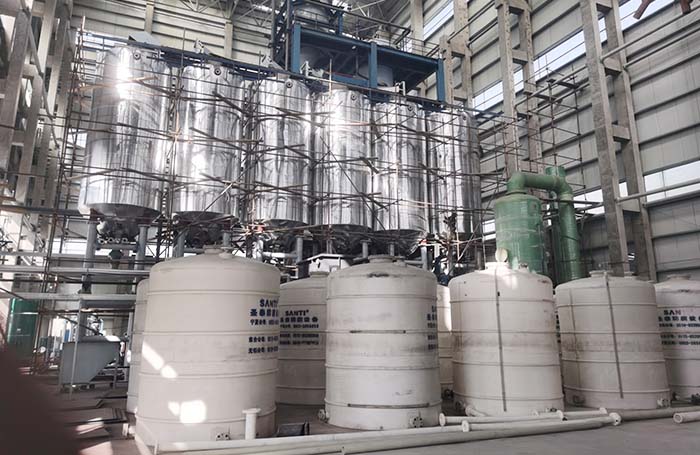
Microbial Iron Removal from Quartz Sand.
Microbial iron removal from quartz sand utilizes various microbial communities to remove film-forming iron or impregnated iron impurities from the surface of quartz sand. Commonly used bacteria include Aspergillus niger, Penicillium, Trichoderma pyriformis, Pseudomonas, Bacillus, Bacillus polymyxa, and Micrococcus lactis.
The above are several methods for treating iron in quartz sand. The choice depends on the nature of the iron impurities in the sand. It is recommended to conduct mineral processing tests and analysis before designing an appropriate quartz sand iron removal method.
To find out more about our products and solutions, please fill out the form below and one of our experts will get back to you shortly.
CONTACT US
welcome to consult through online consultation, hotline, E-mail and other ways.
Copyright Ⓒ 2026 Shandong Guote Intelligent Equipment Technology Co., Ltd
 Powered by HiCheng


